
K? What does that stand for?
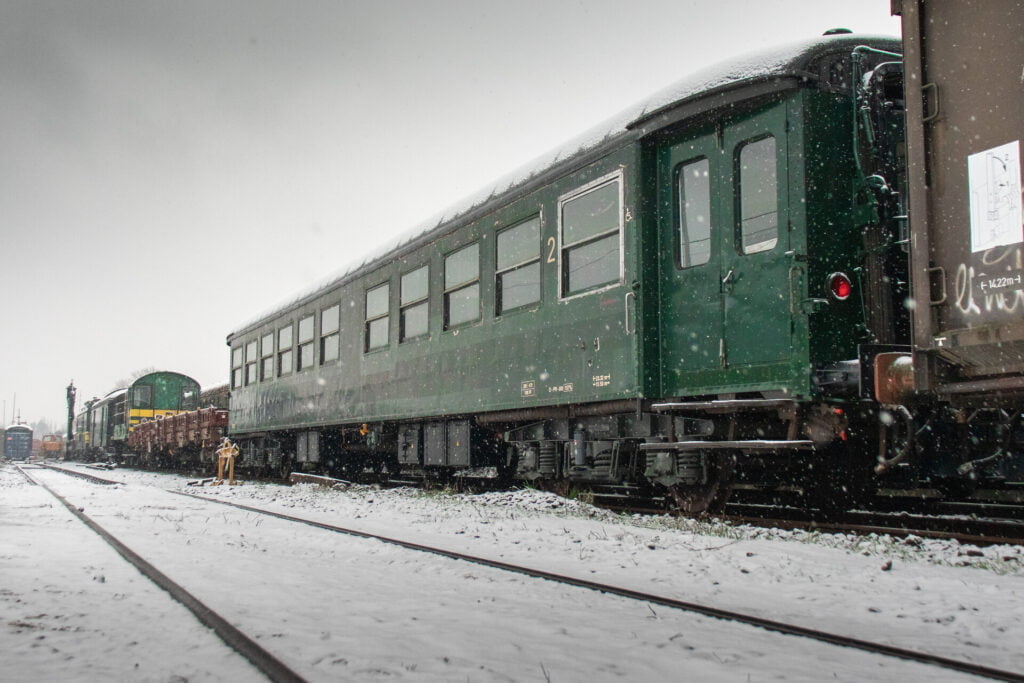
The K-coaches at SNCB were coaches with: doors and balconies at the ends, with a centre aisle and a passage with transition bridge and folding bellows.
Over the years, there were different series in the K coaches at SNCB:
- K1: the first series. Identifiable by the roof with riveted plates and the "Torpede" ventilators on the roof.
- K2: recognisable by the plain roof and folding doors. In this series, only 2nd class coaches were built (possibly fitted with luggage compartments).
- K3: identified by the plain roof and "Schepens" ventilators. Also in this series, only 2nd class coaches were built.
- K4: Originally, 3 K-types were planned at SNCB. But due to a shortage of carriages, SNCB purchased 84 carriages from the French railways (SNCF) in 1994, which entered service from the new timetable in May 1995. These were accommodated as series K4.
History
The K3 coaches were built because there was an urgent need to retire the SNCB wooden coaches (type GCI). The well-known design of the K1 and K2 coaches was used, which was improved by the Central Workshop in Mechelen. The improvements over K1 or K2 were, instead of wooden benches, benches with leather. The doors were also modified: swing doors were used instead of the K2 folding doors. The coaches also received "Schlieren" bogies instead of "Pennsylvania" bogies. The cabinets of these coaches were designed by the M department of SNCB and completely built by the CW Mechelen, while the bogies were built by the AC Salzinnes.
At the end of their careers, most of the K3 coaches were waiting for their fate in Aalst, they were there as reserves but most were scrapped between 1995-2005.
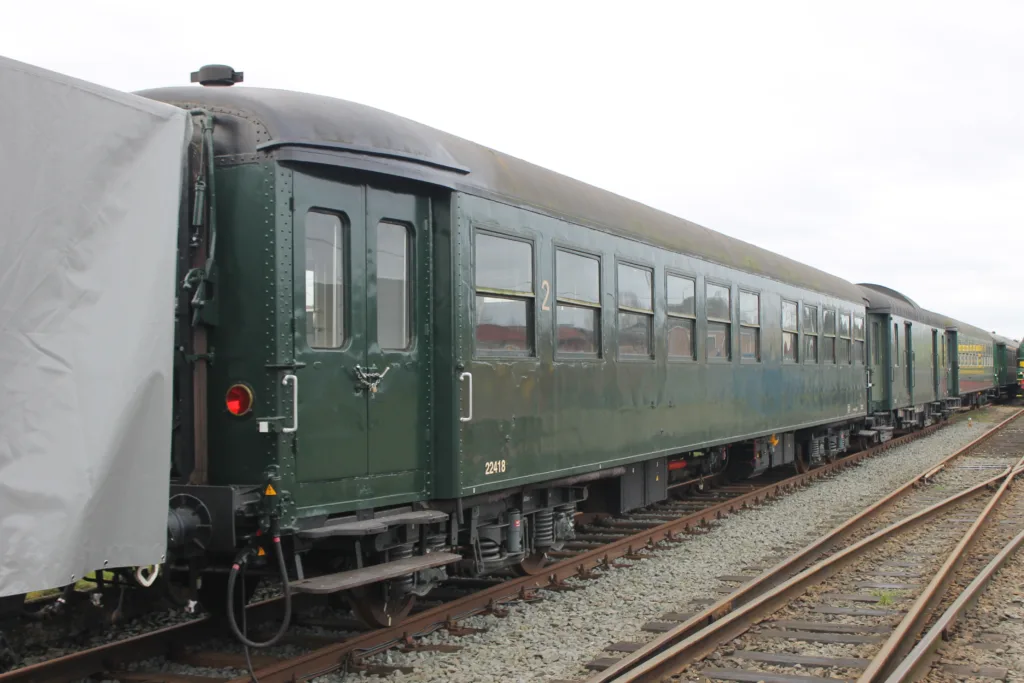
At the club, 2 restored K3 coaches are in running order: the 22476 and 22418.
Coach 22476
The 22476 was first used as museum rolling stock at the Zuid Limburgse Stoomtrein Maatschappij (ZLSM). In 2018, she was sold to private individuals, together with her sister 22418, and transferred to Baasrode where they were immediately used for operation for the association between Baasrode & Puurs.
Since then, the carriage has undergone technical and visual restoration: First up was getting the carriage in technical order, so the bogies were checked for defects and also given a new coat of paint. Then the interior was tackled; after years of use, several benches were in need of replacement.
On the roof, there were also some problems, namely water finding its way through the roof. Thus, the roof was taken in hand by locating and sealing leaks. The coach was completely repainted in 2023.
Coach 22418
The 22418 was first used as museum rolling stock at the Zuid Limburgse Stoomtrein Maatschappij (ZLSM). In 2018, she was sold to private individuals, together with her sister 22476, and transferred to Baasrode where they were immediately used for operation for the association between Baasrode & Puurs.
The 22418 already underwent modifications at the ZLSM to accommodate passengers with reduced mobility.
Meanwhile anno 2024, it also underwent a complete technical and optical overhaul and has since shone back in a new coat of paint, with renewed benches, floor etc.
| Mass | 43 - 48 T |
| Axle load | 12 T |
| Number of seats | 108 |
| Max. speed | 140 km/h |
| Number built | 100 units |
 EN
EN  NL
NL  FR
FR  DE
DE